


Starbrew Cafe: Mystical Merge
4.71.35K Reviews
App Specs
- Version
- 1.80.0
- Updated On
- License
- Free
- Downloads
- 100,000+
- Developer
- Extra Dimension Games Inc.
- Categories
- Puzzle
- Platform
- Android
Screenshots

 Analysis by AppCompare
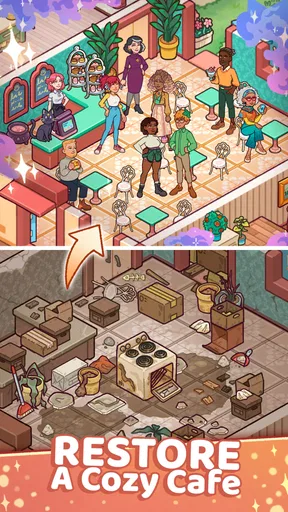
Starbrew Cafe: Mystical Merge is the kind of puzzle game I open when I want something gentle, colorful, and easy to understand without feeling completely empty. Its basic appeal is clear from the first sessions: I combine items, restore parts of a magical setting, and gradually make the cafe world feel more complete. The presentation is cute, but the game works best when the visual charm is supported by the small decisions behind each merge.
Developed by Extra Dimension Games Inc., it is a free game for Android, with a Teen content rating and support beginning at Android 7.1. The current version is 1.80.0. It has reached over 100 thousand installs and holds a 4.7 average from around 18 thousand ratings, which gives a useful indication that its relaxed puzzle-and-restoration formula has found an audience. I would not treat those figures as a guarantee that everyone will enjoy it, but they match my impression: this is a polished, approachable choice for players who prefer a calm progression loop over fast reflexes.
A gentle opening that makes the setting easy to enter
My first impression was shaped less by difficulty than by tone. Starbrew Cafe: Mystical Merge does not present itself as a harsh puzzle challenge. It invites me into a damaged, enchanted place and gives me manageable tasks that make the larger restoration feel possible. That matters because merge games can sometimes look busy or demanding at the start. Here, the early experience is easier to read, and the cute art helps explain what kind of emotional space the game wants to create.
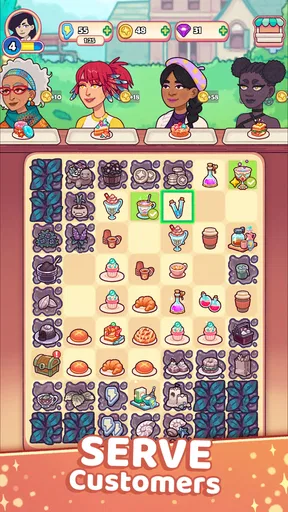
The central action is familiar: I bring matching objects together to produce more useful ones, then use the results to support the cafe’s restoration. The satisfaction comes from seeing several modest actions turn into visible progress. I can spend a few minutes making simple combinations, or stay longer when I want to organize the board and pursue a more deliberate chain. That flexibility makes it suitable for short breaks, although players looking for a deep competitive puzzle may find the rhythm too soft.
A realistic use case is an evening when I have enough attention for a game but not enough energy for a complicated story or demanding action title. I can check the available objects, make a few sensible merges, and leave after a small piece of progress. It also works during a short waiting period, provided I am comfortable with a game that rewards gradual development rather than delivering a complete challenge in one sitting.
The opening is strongest when I treat it as a restoration journey rather than a race. If I rush only toward the next visible objective, the board can feel like a list of chores. When I pause to consider which items are worth keeping together and which spaces need to remain open, the puzzle layer becomes more meaningful. That is one of the first useful lessons I took from playing: space management matters more than fast tapping.
Why the cute presentation does more than decorate the board
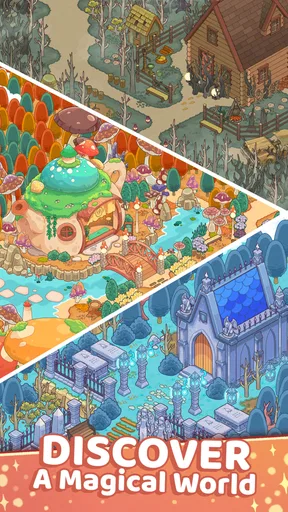
The art direction gives the game its identity. Magical objects, a cafe setting, and a world in need of care create a warmer context than a bare matching grid. I found that the restoration theme changes how I interpret progress. A new object is not only a puzzle result; it feels like another small contribution to making the setting livable again.
Worth Reading Before You Choose

EA SPORTS FC Mobile 26 Is a Bigger Football Game, but It Takes Time

Flipboard Shows What News Apps Must Do Beyond the Feed

Switching to Android Auto Means Rethinking Your Driving Routine

Google Calendar Makes a Crowded Week Easier to Manage

Ludo King Makes the Most of the Minutes Between Plans

Baby Panda World Brings Quick Play to Modern Phones, but Its Game Library Feels Busy
This visual language also makes the game easier to approach for people who are not normally interested in abstract puzzle boards. The objects have a storybook quality, and the setting gives the merge process a reason to exist. That does not transform the mechanics into something entirely new, but it makes the familiar formula more inviting. In my experience, the atmosphere is particularly effective when I play in short sessions, because each return to the game feels like checking on a place rather than restarting a challenge.
There is a trade-off here. A soft, decorative presentation can make a game feel slower than it really is. Players who want strong visual contrast, dramatic stakes, or a more intense fantasy adventure may find the cafe world too sweet. The setting is designed to comfort and encourage, not to surprise me with danger or push me into constant urgency.
The world tells its story through restoration
The setting is most coherent when the game lets the environment carry part of the narrative. Instead of relying only on text or exposition, the act of repairing and improving the world becomes the main form of storytelling. I appreciate that approach because it keeps the story connected to what I am doing with the board. The cafe is not merely a backdrop placed behind a puzzle; it gives the puzzle a visible purpose.
That design also affects pacing. Restoration naturally suggests gradual change, so the slower progression feels appropriate rather than accidental. I am not expected to solve the entire world immediately. Each completed step adds to a larger sense of recovery, and the visual direction supports that idea with a friendly, low-pressure mood.
Still, readers should know what they are choosing. If your favorite puzzle games are built around precise logic, increasingly difficult levels, or a single clever solution, this may not satisfy you in the same way. The pleasure here comes from accumulation, planning, and atmosphere. A traditional match-three game may be better when you want a compact round with a clear win condition. A pure logic game may be better when you want every move to demand careful deduction. Starbrew Cafe sits between those options, using merging and restoration to make the session feel ongoing.
Sound, rhythm, and the feel of a playable mood
The sound design supports the same gentle direction as the artwork. The important point is not whether the audio tries to dominate the experience; it does not feel like that. Instead, sound helps make combinations and progress feel connected to the world. When the visual style is this soft, overly aggressive effects would work against it. The restrained approach keeps the cafe setting feeling cohesive.
I noticed that the game’s rhythm depends on small confirmations: an item changes, a task advances, and the environment gradually looks more cared for. Those moments prevent the board from becoming a silent spreadsheet of objects. The audio and animation work together to make incremental progress feel worthwhile, which is essential in a game where the biggest rewards are usually built from many small actions.
This rhythm is also why the game is easy to pair with everyday routines. I can play while winding down after work, during a quiet morning, or between larger tasks. It does not demand the same uninterrupted concentration as a fast arcade puzzle. At the same time, I would not call it completely mindless. Once the board becomes more crowded, I need to think about what to combine now and what to preserve for later.
One practical tip is to avoid treating every available merge as automatically good. I found the experience more comfortable when I first looked at the board, identified the objects connected to my current goal, and only then made combinations. This reduces the chance of filling useful spaces with items that do not help immediately. It is a small change in habit, but it makes the pacing feel more controlled and less cluttered.
Where the relaxed rhythm can become friction
The same calm pacing that makes the game approachable can test my patience when I want rapid progress. Restoration games usually ask me to accept that the world will improve over time, and Starbrew Cafe follows that expectation. If I arrive hoping to unlock a large amount of content in one sitting, the steady pace may feel restrictive rather than relaxing.
The free entry point is helpful because I can try the core experience without paying first. However, optional in-app purchases range from $0.99 to $149.99 per item, so players should decide early how they want to approach spending. I recommend treating purchases as something to consider only after I know whether the basic loop genuinely suits me. The game is much easier to enjoy when I do not turn every delay into a reason to buy a shortcut.
This is especially important for younger players and for anyone sharing a device. The Teen rating is a useful signal that parents should look at the game’s overall fit rather than assuming that a cute art style automatically means it is aimed at small children. The visual tone is friendly, but the age guidance and purchase range deserve attention before handing the game to someone else.
How the merge mechanics fit the cafe theme
The mechanics are at their best when the board feels like a workshop for rebuilding the setting. Merging is easy to understand, but the surrounding goals give each object more importance. I am not simply chasing a higher-level item for its own sake; I am trying to create the materials or results that help the cafe and its world move forward.
That connection between action and setting is the game’s main mechanical strength. A merge feels more satisfying when it contributes to a visible restoration goal. It also gives me a reason to plan several moves ahead. I may want an immediate combination, but preserving certain objects can be smarter if they are likely to support a later objective. The best sessions are not the ones where I tap fastest; they are the ones where I leave the board in a more useful state than I found it.
A second practical insight is to think in terms of board economy. Open spaces are valuable because they give me room to react when new objects appear or when an objective changes my priorities. I learned to avoid creating large chains simply because I could. Sometimes a smaller merge is better if it clears a troublesome corner or keeps a useful group together. That decision-making gives the puzzle more depth than the cheerful presentation initially suggests.
There is also a nice contrast between the visible simplicity and the slower strategic layer. Someone can understand the basic rule immediately, yet still improve by learning when not to merge. That makes the game accessible to new players without making every decision meaningless. It is not a demanding strategy title, but it rewards a little restraint.
Who will enjoy it, and who should choose something else
I would recommend it to players who like cozy fantasy settings, incremental improvement, and puzzle sessions that can be paused mentally as well as physically. It is a good fit if you enjoy watching a neglected place become more inviting, and if the pleasure of a game comes from many modest improvements rather than one dramatic victory.
It is also a sensible option for someone moving from simpler casual games into merge puzzles. The cafe theme gives the objects context, while the restoration goals help explain why I am collecting and combining them. Players who enjoy decorating or rebuilding settings may find more motivation here than in a plain tile-matching game.
I would skip it if you need fast rounds, strict competitive scoring, or constant mechanical novelty. A traditional match-three title may offer clearer moment-to-moment wins. A high-intensity puzzle game may provide more pressure and sharper mastery. A story-heavy adventure may deliver richer character development. Starbrew Cafe is not trying to replace those experiences; its appeal comes from combining a familiar puzzle structure with a soft magical setting.
Another trade-off is attention. The game is easy to start, but the board can still reward careful organization. If I play while distracted and merge without looking, I can create clutter and make the next session less efficient. That is not a serious flaw, but it means the game is more enjoyable when I give it a few focused minutes instead of treating it as pure background activity.
My atmosphere verdict after settling into the loop
Starbrew Cafe: Mystical Merge succeeds because its art, setting, sound, and mechanics generally point in the same direction. The cute magical world is not separate from the puzzle system; it gives the merging a reason and gives gradual progress an emotional color. I came away feeling that the game understands its own pace. It wants me to restore, organize, and return, not rush through a gauntlet.
The free price makes trying it straightforward, while the strong average rating and broad install base suggest that many players have responded well to this combination. The developer, Extra Dimension Games Inc., has built an experience that is easy to read but not entirely shallow. Its most rewarding decisions appear when I manage space carefully, protect useful item groups, and resist the urge to merge everything immediately.
My main reservation is the slow, ongoing structure. It will not satisfy every player who wants a compact puzzle with a definite ending or a more demanding test of logic. The optional purchase range is another reason to approach it thoughtfully, especially if a younger person will play. I would begin with the free experience, decide whether the restoration loop feels relaxing rather than repetitive, and only then consider spending.
For me, the final impression is positive. This is a cozy puzzle game with a clear mood and a setting that makes its familiar mechanics feel more personal. I would recommend it to a friend who wants a magical cafe to check on during quiet breaks, especially someone who enjoys planning small combinations and seeing a world gradually recover. Its strongest feature is the harmony between atmosphere and action: the board is not just where the game happens, but the tool I use to bring the setting back to life.
Pros
- Relaxing merge gameplay that is easy to learn and play in short sessions.
- Charming magical café theme with colorful visuals and appealing character designs.
- Story-driven progression gives goals beyond simply completing merge boards.
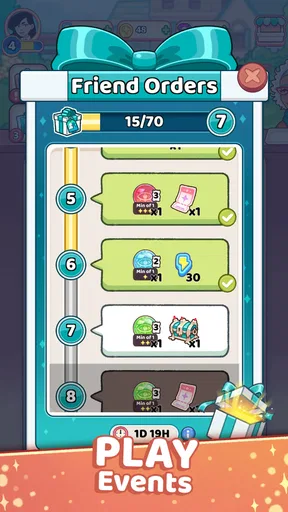
- Regular tasks and events provide extra objectives and rewards to pursue.
- Runs well as a casual game for players who prefer gentle
- non-competitive gameplay.
Cons
- Energy limits can interrupt play when you become invested in a quest.
- Higher-level items may require considerable time or repeated merging to create.
- Some upgrades and progress can feel slow without using premium resources.
- The number of pop-ups and offers may become distracting during longer sessions.
- An internet connection may be required for certain features and progress syncing.
FAQs for Starbrew Cafe: Mystical Merge
What is Starbrew Cafe: Mystical Merge about?
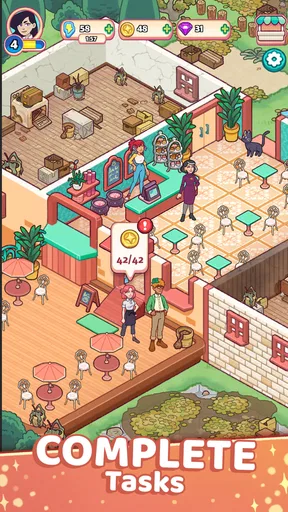
Starbrew Cafe: Mystical Merge is a casual puzzle and café-management game that combines merge mechanics with a magical story. You merge matching ingredients and useful objects to create upgraded items, then use them to prepare recipes, serve customers, and improve the café. Along the way, you meet colorful characters, unlock new areas, and follow story-driven tasks in a cozy fantasy setting.
How does the merging gameplay work in Starbrew Cafe: Mystical Merge?
The main gameplay involves combining two or more matching objects on the board to produce a more advanced item. New ingredients, tools, and café supplies appear as you complete actions or open containers. Planning is important because the board can become crowded quickly. Managing available spaces, prioritizing quests, and deciding which items to merge first makes progress smoother and more rewarding.
Can Starbrew Cafe: Mystical Merge be played offline?
Some basic activities may remain available without a constant internet connection, but the game is designed to work best while online. An internet connection may be required for loading certain story content, synchronizing progress, receiving events, watching optional advertisements, or accessing purchases. Availability can also vary by device and game version, so players should check the current store description before downloading.
Does Starbrew Cafe: Mystical Merge include in-app purchases or advertisements?
Yes, Starbrew Cafe: Mystical Merge may include optional in-app purchases and advertisements, as is common with free-to-play merge games. Purchases can provide premium currency, energy, boosters, or other time-saving resources, while ads may offer optional rewards. You can usually progress without spending money, although waiting for energy or managing resources carefully may be necessary.
Is Starbrew Cafe: Mystical Merge suitable for children and casual players?
The game is generally suitable for players who enjoy relaxed puzzles, decorating, light storytelling, and fantasy-themed café adventures. Its controls are simple to learn, making it accessible to casual players, although progress can involve energy limits, repeated merging, and optional purchases. Parents should review the age rating, advertising settings, and payment protections on the relevant Android or iOS device before allowing children to play.


